You are here: Home page " Franciscan monastery - Klösterl hermitage
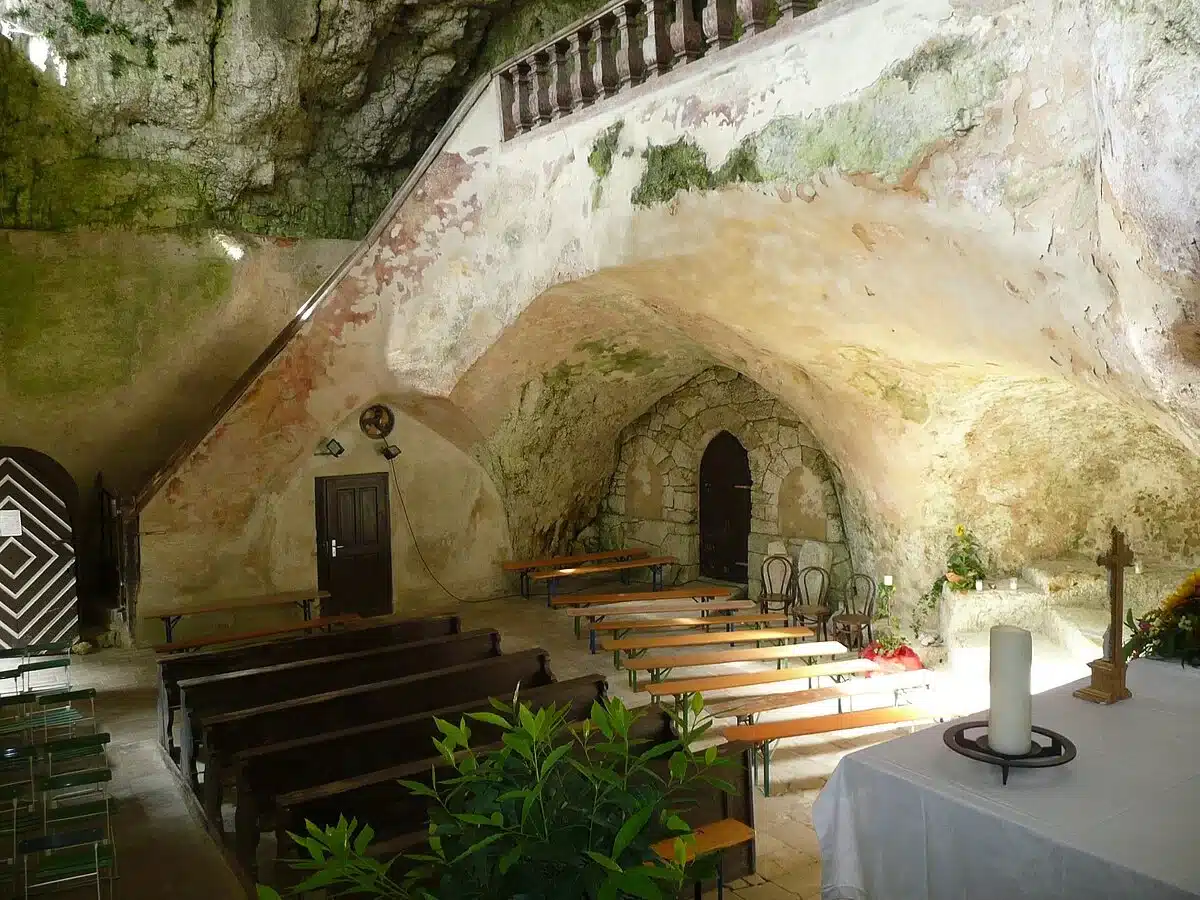
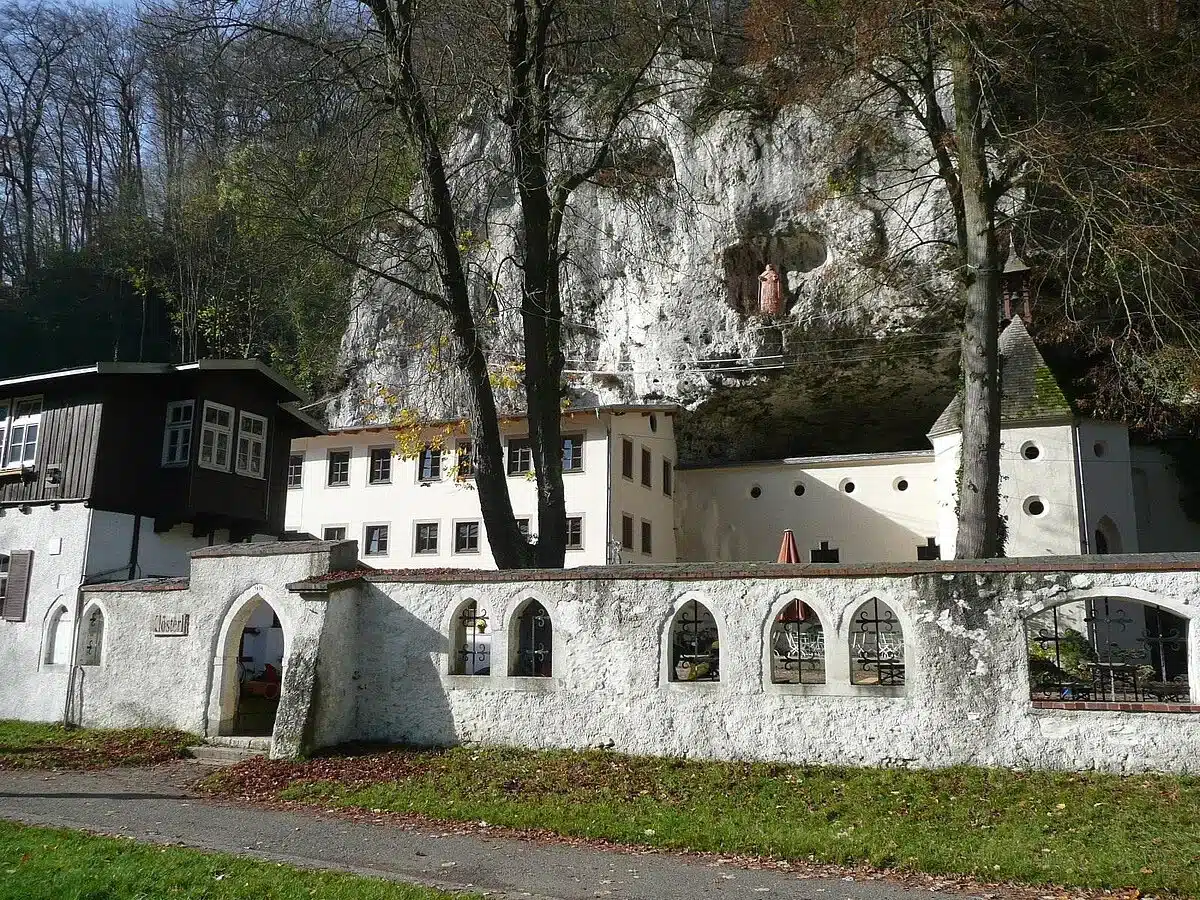
The Klösterl hermitage, surrounded by the Danube with its wild, pristine nature as well as forests, rocks and caves, was originally an early Franciscan monastery dating back to 1454. The unique rock church with frescoes is worth seeing, as are the sleeping caves, the St. Nicholas chapel and the terracotta figure of "St. Nicholas" in the rock. The "Gold Furnace" cave, the place of work of an alchemist and another place of worship of earlier cultures.
Life from its origins to the present day is shown in the former Franciscan monastery from the 15th century, Celts, Romans, early Middle Ages to modern times.
In 1454, the hermit Antonius de septem castris built a simple hermitage and a small chapel in the quiet, romantic Mulde Valley in honor of Saint Nicholas, the patron saint of sailors. Soon, several forest friars from the Third Order of Saint Francis joined him. Thanks to the support of Dukes Albrecht III and Louis the Rich, as well as various bequests, Brother Anton was able to erect a larger building, construct the distinctive church, and enclose the entire monastery complex with a monastery wall. Thus the little monastery, also known as „Bruderloch,“ was established in the Traun Valley. According to other sources, Tertiaries are said to have settled in the little monastery as early as 1289. However, it was Brother Anton who gave the little monastery greater significance. On February 2, 1454, Duke Albrecht granted Brother Anton, a member of the clergy, permission to use the dwelling for this purpose as well. Permission was also granted to take wood from the ducal forests. On January 5, 1455, Duke Albrecht granted the brothers of the Order of St. Francis a number of plots of land at „Bruderloch,“ along with all associated rights, to them and their descendants in perpetuity. Emperor Frederick confirmed the privilege granted to Brother Anton and his descendants, and on July 5, 1459, the little monastery also received confirmation from Pope Pius II. But Brother Anton was not able to enjoy his property for long. In 1459—or, according to other sources, as early as 1457—he was forced to cede the property to the Franciscans in Würzburg. Disheartened by this, Brother Anton packed his belongings and set out, first for Vienna. There he bought a horse and armor to go to war against the Turks; on his way back, robbers ambushed him, plundered him, and killed him. After the Observants had relinquished the little monastery, Pope Sirtus IV ordered on May 9, 1472, in a breve that the „Bruderloch“ hermitage be transferred to the Tertiaries, and on July 5, 1472, the hermitage was indeed handed over to Brother Wilibaldus as its superior by Prior Johannes of the monastery. The hermitage is listed in Part A of the Kelheim District List of Historic Monuments under Rebdorf. Later, the Tertiaries handed over the „Bruderloch“ hermitage to the Franciscans, with whom it remained until secularization. In 1803, the monastery passed to the state as a result of secularization. Ritter von Wels, a university professor, judge, and notary, purchased the monastery, and it became a popular destination for day trips and a summer retreat.
Today, the Klösterl is privately owned.
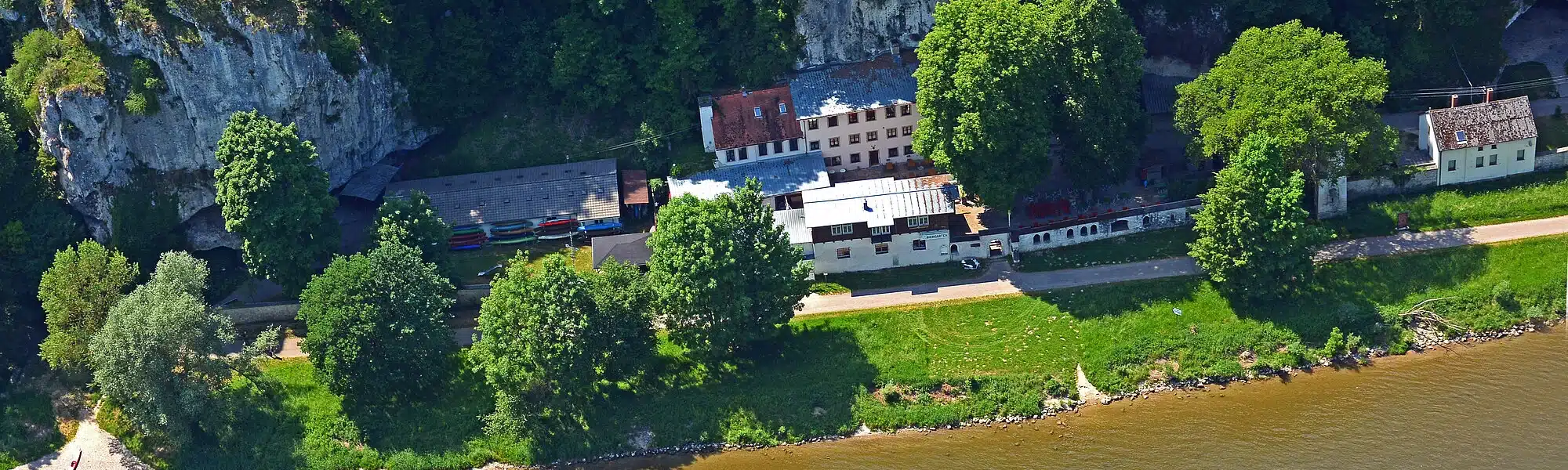
The Klösterl is located on the left bank of the Danube between Kelheim and the Weltenburg Narrows. Starting from the Danube boat landing, the Klösterl can be reached upstream in about a 15-minute walk (approx. 1 km).
Then simply contact us at any time using the following contact options: